This article is about the detailed Information about Aerospace Electronic Components.
Aerospace Electronic Components
The design, production, and use of satellites, aircraft, spacecraft, and associated equipment are only a few of the many operations that fall under the broad umbrella of the aerospace sector. The diverse spectrum of applications in the aircraft sector consistently pushes the boundaries of engineering and technology. Electronic devices are essential in aerospace applications because they help to maintain the safety, functionality, and efficiency of various systems in airplanes, spacecraft, and other aerospace vehicles. Commercial aviation, military use, and space exploration all need aircraft industry components that are not only extremely dependable and efficient but also able to survive harsh situations.
Understanding Different Types of Aerospace Electronic Components
The design, development, and operation of aircraft, spacecraft, satellites, and associated systems are among the many applications that fall under the umbrella of the aerospace sector. The aerospace sector has a wide range of applications that frequently push the limits of engineering and technology.
In aerospace applications, electrical components are essential to the efficiency, usefulness, and safety of many systems in airplanes, spacecraft, and other aerospace vehicles. The aerospace sector requires parts that are not only extremely durable and effective, but also able to survive harsh environments and support the accomplishment of missions in the fields of space exploration, military operations, and commercial aviation. This blog mainly talks about the aerospace electronic components like high power amplifiers, integrated transceivers, RF and Microwave Devices, Inertial Measurement Units, and so on.
Different Types of Aerospace Electronic Components
High Power Amplifiers
The market’s options for COFDM digital links are expanded by the high power amplifier’s compatibility with the majority of transmitter types. This amplifier’s low intermodulation and outstanding endurance make it especially interesting for use in broadcast and aerial applications. This power amplifier enables high-power microwave transmissions to function with previously unheard-of performance and reliability. It is designed specifically to work in scenarios that call for a power amplifier that can tolerate challenging environmental conditions. It is housed in a robust aluminum housing.
Some of the key characteristics of a high power amplifier include multiple frequency ranges, ultra linear or saturated operation, three manually switchable power levels, open and short protection on RF ports, a power supply range of 9 to 36 VDC, reverse polarity protection, and a digitally controlled standby mode.
Integrated Transceivers
Several functions are combined into a single integrated circuit via integrated transceivers. For example, the new transceiver is a single, monolithic, 12 mm by 12 mm device that integrates DACs, ADCs, mixers, microprocessors, local oscillator (LO) synthesizers, and more. This device also incorporates digital signal processing (DSP) components into two transmit and two receive channels in order to achieve the instantaneous bandwidths required by the system. For transceiver operation, an application program interface (API) for the customer platform is also provided. The gain and attenuation can be controlled via the on-chip front-end networks. Tracking calibration procedures and built-in initialization offer the performance required for many military and telecom applications.
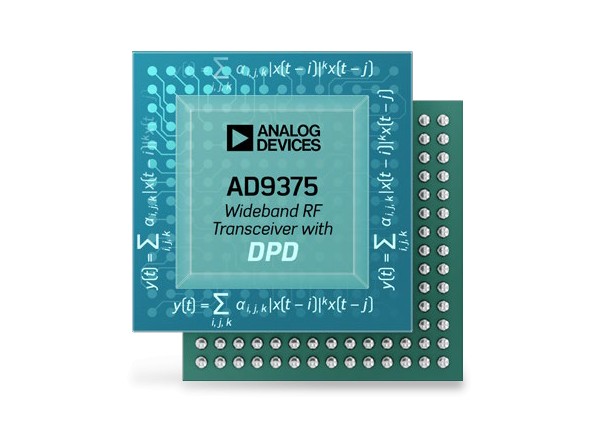
These integrated transceivers may create all the clock signals needed for the transmitters and receivers by injecting a single reference clock signal called REF_CLK. On-chip phase-locked loops, or PLLs, are then used to generate the appropriate clocks for the CPU clock, LO generation, and DAC/ADC sampling. If the internal low-phase noise is not enough for the customer’s application, the user can alternatively inject their own low-phase noise external LO.
RF and Microwave Devices
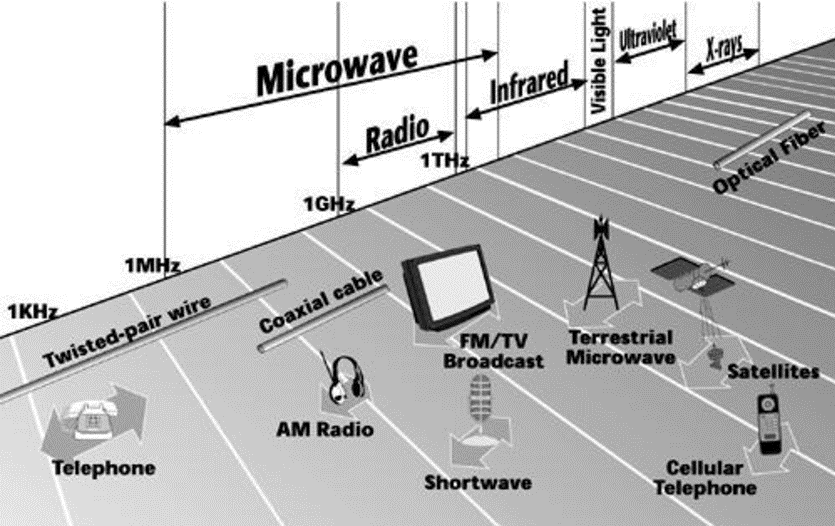
Telecommunications and radar applications in the aerospace and defense sectors provide and receive radio frequency (RF) signals to perform specific tasks. This information may originate from the flight paths of commercial aircraft and helicopters, or it may come from military hardware that detects or blocks the transmitted frequencies of adversarial radar systems. Depending on the specifics of the device, a strong diplexer with RF filters will be needed to divide the different broadcast and received signals via a single antenna in accordance with frequency allocation. People who are aware of the characteristics of a diplexer can select the ideal filter and parts for the job.
As a trustworthy supplier of electronic components, we offer authentic and original parts to lower the effects of heat and vibration, which lessens the possibility of in-flight issues and allows the gadget to function as efficiently as possible.
RF Transceivers
The future lies in integrating ZIF architecture into a monolithic transceiver device for next-generation systems. Placing the RF and analog signal chains on a single silicon chip will reduce process variation. Moreover, DSP blocks can be integrated by the transceiver, removing the need to distinguish between the quadrature calibration method and the signal chain.
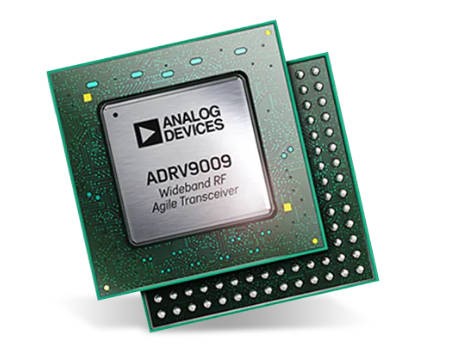
This technique offers unparalleled improvements in SWaP and can match the superheterodyne architecture for performance metrics. Digital processing is used in these RF transceiver devices to provide real-time quadrature and carrier leakage correction across all process, frequency, and temperature variations. Additionally, they combine all RF, analog, and digital signal chain functions into a single CMOS device.
Inertial Measurement Units
An IMU, or inertial measuring unit, is an electronic device that tracks and records angular rates, acceleration, direction, and other gravitational forces. Depending on the required heading, it consists of three magnetometers, three gyroscopes, and three accelerometers. The three vehicle axes are roll, pitch, and yaw, one for each axis. There are three types of IMU sensors: those utilizing ring laser gyroscopy (RLG), those utilizing fiber optic gyroscopy (FOG), and those utilizing micro-electro-mechanical systems (MEMS) technology. Performance is ensured at lower costs and power requirements with this technology. As a result, MEMS-based systems offer excellent performance and extremely low power consumption in smaller units.
Depending on the grade, the main applications of IMU sensors are in testing and measurement, navigation and correction, and control and stabilization. However, autonomous systems control, mobile mapping applications (air, sea, or land), and any payload that requires orientation or stabilization are popular markets for measuring units.
Because of their exceptional performance/size ratio, MEMS IMUs are ideal for all unmanned markets, be it unmanned ground vehicles (UGV), unmanned aerial vehicles (UAV), or unmanned marine vehicles (UMV). On the other hand, the tactical and navigation grade IMU is one of the essential components of the INS/GNSS used in ships, aircraft, missiles, and even satellites.
Standards and Quality Are Important for Aerospace Electronic Components
To guarantee each component’s dependability, safety, and performance in the harsh conditions of aerospace applications—which can include extremely high temperatures, strong vibrations, electromagnetic interference, and other difficult circumstances—manufacturers of aerospace electronics are required to adhere to strict quality standards. Due to the potential for serious consequences—from equipment failures to fatalities—when an electrical component fails in aerospace applications, these standards cover a wide range of design, manufacturing, testing, and quality control activities.
Produced standards, such as those produced by groups like the International Organization for Standardization (ISO), offer a foundation for guaranteeing quality, safety, and dependability in the aerospace sector. The aerospace industry’s suppliers, manufacturers, and organizations work together to uphold these requirements and continuously enhance the caliber of electrical components. The aerospace industry, including distributors of electrical components, relies on ISO 9001 and AS9100 as quality management standards to guarantee a constant level of quality in their operations, goods, and services. In this instance, AS9100 is specially designed to meet aircraft quality standards.
Future Trends of Aerospace Electronic Components
Aerospace inventions and technology have a wide range of applications, from facilitating satellite communication to expanding our knowledge of the cosmos through space travel. The aerospace sector is always changing due to new developments in technology, shifting consumer needs, and the need to maximize efficiency and safety. The development of aircraft electrical components is being influenced by a number of emerging trends, such as smaller components for space efficiency, smarter, more integrated component production, and the use of new materials.

In order to facilitate predictive maintenance and improve system monitoring, new smart circuit breakers with sensors and communication capabilities can offer real-time data on temperature, fault states, and current loads. Additionally, the development of lighter and smaller switches and connectors is being fueled by space optimization and miniaturization, which will be helpful for aircraft vehicles where space is limited.
Aerospace applications rely heavily on electrical components to provide vital operations like instrumentation, power generation, control, safety, and communication. Whether it is for space exploration, military use, or commercial aviation, the aerospace sector requires extremely reliable, efficient parts that can survive harsh environments.