Introduction to Cloud Computing
Cloud computing is a revolutionary approach to managing and delivering services through the Internet. By using this method, companies can access computing resources and applications in a flexible and cost-effective manner. Cloud computing has transformed the traditional IT landscape, promising to provide maximum resources, information, and technical services to customers on demand. It has gained popularity in the industry due to its scalable nature and ability to adapt to changing business needs. This allows companies to save time and money by eliminating the need for costly upfront investments in hardware and infrastructure. Cloud computing also offers high levels of security, reliability, and accessibility, which are essential in today’s digital age. Companies can access data and applications from anywhere, at any time, which improves operational efficiency and helps them stay ahead of the competition.

Additionally, it is a method of delivering IT resources, including computing power, storage, and software, via the Internet. Rather than managing their own hardware and software, users can access these resources on demand from a remote server. Cloud computing services are typically charged on a pay-per-use basis, providing a cost-effective solution. The provider manages the infrastructure, allowing users to focus on their own applications and data. This model allows for dynamic changes to the service load based on end-users service requests, and computing resources can be accessed as needed from centralized servers. The cloud computing model enables scalability, so resources can be easily adjusted to meet changing demands, providing flexibility and efficiency for users. With the provider managing the infrastructure, users are freed from the responsibility of maintaining and updating hardware and software and can access resources on demand.
The depicted figure illustrates the various resources and services that are available to customers for their work via cloud computing. These resources can be accessed through mobile devices, desktops, and laptops from any location, at any time. Depending on their specific needs, customers can select from a range of cloud options, including private, public, and hybrid clouds. This provides them with the flexibility to choose the type of cloud that best suits their requirements. Regardless of the cloud option chosen, cloud computing enables customers to access resources and services on-demand, making it a convenient and versatile solution for their work needs.
Methodology Of cloud computing
Cloud computing is built on the foundation of two primary techniques. They are:
- Service Oriented Architecture (SOA): Cloud computing is built on the concept of service-oriented architecture (SOA), which delivers tasks as services to users rather than products. This approach provides scalable, flexible, and efficient computing resources to users on-demand, allowing organizations to concentrate on their core competencies. SOA-based architecture offers a set of guidelines for developing and integrating a system. It enables sharing of services across various business areas, creating a more adaptable and scalable system. This implies that services can be reused and combined to meet diverse business needs, avoiding duplication and improving efficiency. Consequently, implementing a SOA-based architecture can lead to a more streamlined and cost-effective IT landscape. The technologies that support SOA enable services to be discovered, composed, and executed, creating a dynamic environment that meets changing business requirements.
- Virtualization: Virtualization is a key aspect of cloud computing that involves creating virtual versions of physical resources and making them available over the internet. The purpose of virtualization is to provide users with easy access to resources, without the need for managing hardware and software. By creating virtual resources, cloud computing platforms enable users to benefit from scalability, cost-effectiveness, and simplified management. Virtualization in cloud computing helps organizations optimize their infrastructure and improve efficiency, while reducing complexity and costs. It enables applications to run on different operating systems, hardware configurations, and environments, without compatibility issues. This results in increased flexibility and cost savings for businesses. For example, server virtualization allows multiple virtual servers to run on a single physical server, while storage virtualization combines multiple storage devices to be managed as a single entity. Operating system-level virtualization allows multiple isolated applications to run on a single operating system instance, improving application performance. Overall, virtualization is a critical technology in cloud computing, providing a cost-effective solution for businesses, efficient resource utilization, and the deployment of cloud services.
Ontology Of Cloud Computing
Cloud computing is a model that enables users to access computing services and resources over the internet. Ontology, on the other hand, is a method for organizing knowledge in a structured and systematic manner, providing a framework for understanding concepts, relationships, and categories within a specific domain.
In cloud computing, an ontology-based approach involves using a structured representation of cloud services, providers, and their respective requirements and conditions. This approach aims to create a comprehensive and well-organized view of the cloud services domain, which facilitates better management and understanding of these services.
Through the use of proper tools and techniques, such as ontology-based approaches, selecting and integrating cloud services becomes much easier. This leads to improved interoperability between different cloud systems and greater efficiency and cost-effectiveness for businesses. Overall, ontology-based approaches are a crucial aspect of cloud computing, enabling businesses to optimize their cloud services and resources.

The figure provides an overview of the different layers of cloud computing architecture and the types of resources that are available in each layer. The five layers are:
- Software as a service (SaaS) is a model of delivering software applications through the cloud, where the provider is responsible for hosting and maintaining the software, and customers access it through a web browser or dedicated app. This model eliminates the need for customers to install and manage the software on their own devices and enables them to pay for the software on a subscription basis, usually on a monthly or annual basis. SaaS has become a popular choice for businesses of all sizes due to its cost-effectiveness, scalability, and ease of use. It allows businesses to access powerful software applications without the need for significant upfront investment in hardware and IT infrastructure. Additionally, SaaS providers typically offer regular updates and maintenance to their software, ensuring that customers have access to the latest features and security updates.
- Platform as a Service (PaaS) is a cloud-based delivery model where a provider offers a computing platform to customers, enabling them to develop, deploy, and manage their applications with ease. PaaS provides customers with a complete development environment, including the operating system, middleware, runtime, and other necessary services, eliminating the need for customers to manage the underlying infrastructure. This allows customers to focus on developing their applications without worrying about the complexity of the underlying infrastructure. PaaS providers offer various services such as database management, application hosting, development tools, and security features. With PaaS, customers can quickly develop and deploy their applications without the need for extensive coding or infrastructure knowledge.
- CaaS is an abbreviation for communications as a service, which is a cloud-based solution that offers a range of communication and collaboration tools for businesses via the Internet. These tools can include email, instant messaging, voice and video conferencing, and other communication services. CaaS is designed to provide companies with a highly adaptable and scalable communication system that can be effortlessly maintained and upgraded without requiring internal support.
- Infrastructure as a service (IaaS) is a cloud computing model that allows customers to access virtualized computing resources, such as servers, storage, and networking, over the Internet. This eliminates the need for companies to invest in and maintain their own physical hardware and allows them to easily scale their resources up or down based on their needs. Customers only pay for what they use, making IaaS a cost-effective option for businesses of all sizes. Popular IaaS providers include Amazon Web Services (AWS), Microsoft Azure, and Google Cloud Platform (GCP).
- Desktop as a Service (DaaS) is a cloud computing service that provides virtual desktops to users through the Internet. With DaaS, users can access their desktop environment from any device and location, without the need for physical hardware. The service provider manages and maintains the virtual desktop infrastructure, including hardware, software, and security, allowing businesses to save on costs and resources. DaaS is a flexible and scalable solution that offers improved security and accessibility compared to traditional desktop environments.
- Hardware as a service (HaaS) is a service model in which businesses can lease hardware and equipment instead of buying them. The provider takes care of maintenance, upgrades, and repairs, allowing clients to focus on their core business activities. This service model helps companies to save money, reduce capital expenditures, and avoid the risk of owning outdated hardware. HaaS is an efficient way for companies to stay up to date with the latest technology without the need for large upfront investments.
Epistemology of the Cloud Computing
Epistemology in cloud computing refers to the examination of how the adoption and use of cloud technology affects the acquisition, storage, and sharing of knowledge. It analyzes the impact of cloud computing on information management and distribution, and the resulting changes to our understanding of knowledge. Cloud computing represents a shift from localized data centers and personal computers to centralized systems for data storage and processing, resulting in more widespread access to information. While this shift can increase efficiency and connectivity, it also raises concerns about data security and privacy. Overall, cloud computing alters the way knowledge is managed, stored, and accessed in the digital age.
Performance of the Cloud Computing
Cloud computing performance is determined by how efficiently and quickly a cloud system operates, which is influenced by several factors including the hardware and network infrastructure, system load, and application design. The allocation of resources in cloud computing can be flexible but may result in reduced performance during periods of high demand. The performance of cloud computing can be affected by latency and decreased efficiency, especially when multiple users are simultaneously accessing the same resources.
Cloud computing performance is a crucial factor that determines the level of efficiency and speed in which a cloud system operates, and it is impacted by various factors such as hardware and network infrastructure, system load, and application design. One significant issue that can affect cloud computing performance is network connectivity, which can result in latency and decreased performance for users located far from the data center. Overall, cloud computing performance is a complex issue that requires careful evaluation and selection of a provider with a robust infrastructure to ensure optimal performance.
Hardware platform of the Cloud Computing
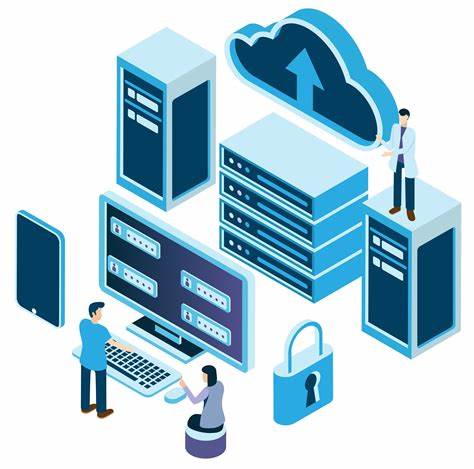
The term “cloud computing hardware platform” refers to the physical resources, including servers, storage systems, networking components, and virtualization software, that are used to provide cloud computing services. These components work together to deliver the necessary computing power, storage, and connectivity to support cloud-based applications and services. The hardware platform is a critical component of any cloud computing environment and must be carefully designed, implemented, and managed to ensure optimal performance, reliability, and security.
Software platform of the Cloud Computing
Cloud computing software platforms have gained immense popularity due to their ability to store and manage data and applications remotely. Cloud computing has several advantages, including increased efficiency, scalability, and cost-effectiveness, but it also poses significant risks and challenges, such as cybersecurity threats and vendor lock-in. These risks can result in unauthorized access, data breaches, and cyberattacks, so it is crucial for companies to implement robust security measures such as encryption and multi-factor authentication. Vendor lock-in is another issue that can limit a company’s flexibility and control over their data and technology infrastructure. Therefore, it is essential for companies to consider these challenges and risks carefully when choosing a cloud computing platform and ensure that they have the necessary security measures in place to protect their data and applications.

Cloud Computing in Organization
Cloud computing has brought about significant changes in how businesses handle their data, software applications, and infrastructure. The advantages of cloud computing are numerous, including greater flexibility, scalability, accessibility, cost-effectiveness, and enhanced disaster recovery. However, there are also several challenges that need to be considered before adopting cloud computing. These include security risks such as data breaches, unauthorized access, and cyber-attacks. Another challenge is vendor lock-in, which can limit a company’s control over its technology infrastructure and impede migration to a different provider. Additionally, dependence on internet connectivity and lack of control over third-party hardware and infrastructure can also pose challenges. Companies must evaluate their specific needs and carefully weigh the pros and cons of cloud computing before deciding on a platform. They must also implement robust security measures to protect their data and infrastructure.
Potential Applications of the Cloud Computing
Cloud computing has a wide range of potential applications across industries, including but not limited to: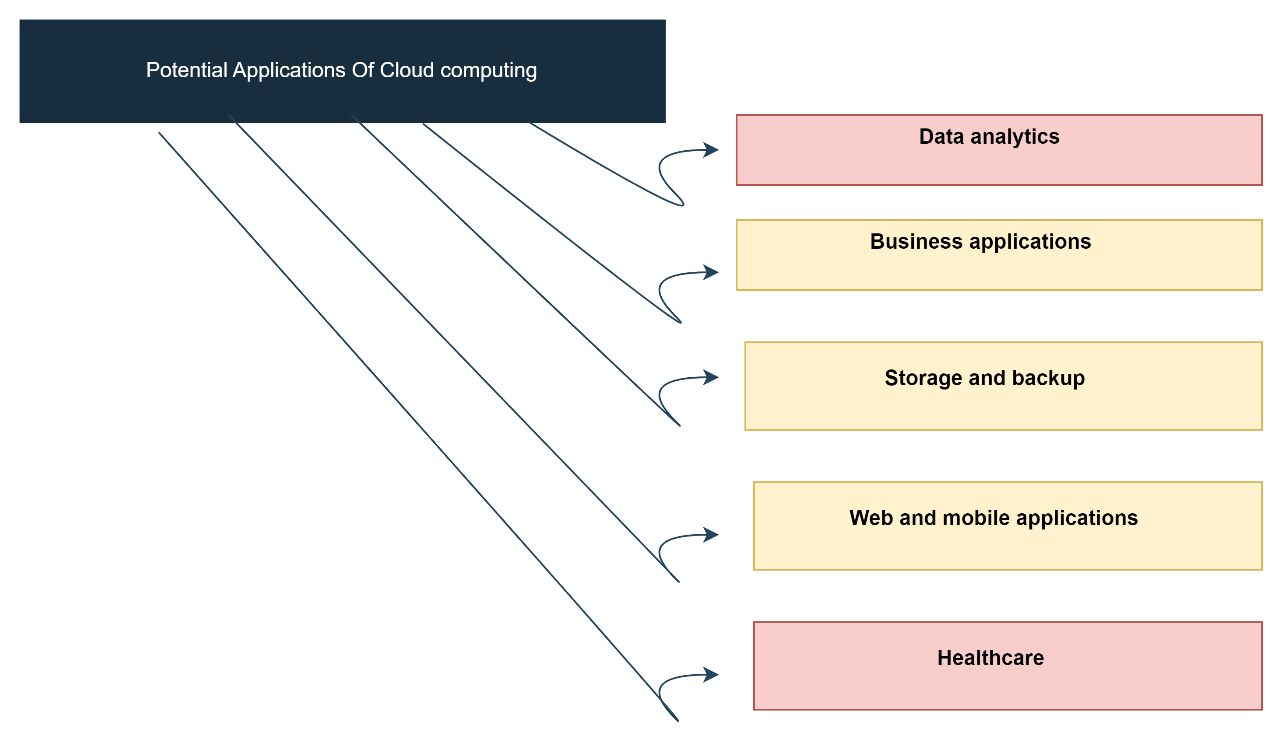
-
- Data analytics: Cloud computing offers organizations the ability to access and utilize the necessary computational resources for large-scale data analytics regardless of their size. This allows organizations to process and store vast amounts of data in a cost-effective and efficient manner, enabling them to gain insights and make informed decisions based on their data. Cloud-based analytics also offer real-time processing capabilities, enabling organizations to quickly respond to changes in the market or identify potential issues before they become major problems.
- Business applications: Cloud computing allows businesses to access software applications through the internet without having to install or maintain them on local servers. This is known as software-as-a-service (SaaS) and it can be used for various tasks such as managing customer relationships, human resources, and accounting. By using SaaS, businesses can save time and money while increasing productivity, as they can easily access and use these applications from anywhere with an internet connection.
- Storage and backup: Cloud storage allows businesses to store and backup their data in an off-site location, providing a convenient and secure way to access and protect important information.
- Web and mobile applications: Cloud computing provides a platform for the development, testing, and deployment of web and mobile applications, allowing developers to easily access the necessary computing resources, such as servers and storage, to create and deploy their applications. This reduces the time and cost required for developing and deploying applications, as well as providing scalability and flexibility for the applications as they grow and require more resources.
- Healthcare: Cloud computing has the potential to transform the healthcare industry by allowing the secure sharing of electronic health records (EHRs) and other medical data. This can improve patient care by providing healthcare providers with access to up-to-date patient information, regardless of location or medical facility. Cloud computing can also support the development and deployment of healthcare applications and services, such as telemedicine and remote patient monitoring, that improve access to care and reduce costs. However, the use of cloud computing in healthcare also presents unique challenges related to privacy, security, and regulatory compliance that must be carefully managed.
It’s crucial to note that cloud computing has both advantages and disadvantages, and organizations should consider them before deciding to adopt cloud-based solutions. While cloud computing offers benefits such as increased flexibility, accessibility, and cost savings, there are also potential challenges and limitations to consider, such as data security and privacy concerns, vendor lock-in, and potential loss of control over data and applications. Therefore, organizations should conduct a thorough analysis of their needs and carefully weigh the pros and cons of cloud computing before making a decision.
Advantages of Cloud Computing
Some advantages of cloud computing include
- Accessibility: Cloud computing offers the advantage of allowing users to access applications and data from any location with an internet connection, making it a convenient option for businesses that have remote employees or multiple branches. This means that employees can work from home or other locations without any issues, as long as they have access to the internet. This also allows for greater flexibility in work arrangements and can help reduce costs associated with office space and equipment.
- Cost-Effectiveness: Cloud computing can provide cost savings for businesses by offering shared resources and a pay-as-you-go pricing model. This means that businesses only pay for the computing resources they use, rather than investing in and maintaining their own physical hardware. Additionally, shared resources can be more cost-effective as they allow multiple customers to share the same infrastructure, resulting in lower overall costs.
- Scalability: In cloud computing, scalability refers to the ability of the system to handle increasing workloads and demands by dynamically allocating and adjusting resources such as computing power, storage, and network bandwidth. This allows businesses to easily expand their operations without the need for additional hardware or infrastructure upgrades, resulting in more efficient resource utilization and cost savings. The scalability of cloud computing is achieved through the use of advanced hardware and software systems that can automatically adjust resource allocation based on demand.
- Reliability: Cloud computing providers usually make significant investments in their hardware and infrastructure, which results in a high degree of reliability and uptime. This is due to the use of redundant hardware, backup systems, and failover mechanisms that ensure that services remain available even in the event of hardware or software failures. Additionally, cloud computing providers typically have skilled personnel dedicated to maintaining and monitoring the infrastructure to ensure that issues are addressed promptly.
Disadvantages of Cloud Computing
Some potential disadvantages of cloud computing include
-
- Security: Storing sensitive information in the cloud can present security risks, as the data is not under direct control of the user, and it is vulnerable to breaches, hacking, and unauthorized access. The reliance on third-party service providers for data storage and management can also lead to concerns about data privacy and ownership. Additionally, the dependence on internet connectivity and the cloud provider’s infrastructure can result in downtime or service interruptions, impacting business operations. Another potential disadvantage of cloud computing is the risk of vendor lock-in, where organizations become dependent on a particular provider’s technology and services, limiting their flexibility to switch to other providers or migrate to other solutions.
- Reliance on Internet Connectivity The success of cloud computing is heavily reliant on the quality and consistency of internet connectivity, which may vary depending on the location and infrastructure available. This can potentially result in decreased performance and accessibility for users in areas with poor internet connectivity.
- Lack of Control: Organizations may have limited control over the hardware and infrastructure used to store and process their data when using cloud computing services provided by a third-party.
- Vendor lock-in: Once an organization has invested significant time and resources in a specific cloud provider, it may become difficult to switch to a different provider due to the challenges of migrating data and applications. This can result in vendor lock-in, where an organization becomes dependent on a particular provider and may have limited options for switching providers in the future.
Conclusion
In conclusion, cloud computing has revolutionized the way organizations store, manage, and process data and applications, providing increased flexibility, scalability, accessibility, and cost savings. It offers a wide range of potential applications across industries, from data analytics to web and mobile application development, and can potentially improve patient care in healthcare. However, there are also potential challenges and risks, such as data security and privacy concerns, vendor lock-in, and loss of control over data and applications. Therefore, organizations must carefully consider the benefits and drawbacks of cloud computing when deciding whether to adopt cloud-based solutions for their specific needs. Despite these challenges, cloud computing is likely to continue to play an increasingly important role in shaping the future of business and technology.
Recommendation
Some recommendations and future work for cloud computing entail:
- Finding ways to optimize cloud storage and data management systems to increase efficiency and reduce costs.
- Exploring the possibilities of using edge computing and hybrid cloud models to overcome challenges associated with network latency and limited bandwidth.
- Expanding the integration of artificial intelligence and machine learning technologies in cloud computing to enhance the scalability and overall performance of cloud-based solutions.
- Enhancing the compatibility and flexibility of cloud services to facilitate seamless integration and migration.
- Implementing stronger security measures to mitigate potential vulnerabilities and prevent security breaches.
Read about: What is Blockchain Technology & How it Works